Resources for New World Screwworm (NWS)
With the recent spread of the New World screwworm (NWS) fly into the United States, we’d like to provide a few resources to livestock producers, pet owners and the veterinary community.
Multiple cases have now been confirmed in Texas and New Mexico, both in cattle and dogs, but are currently contained to this region. Ongoing updates can be found at the USDA’s news announcement page. If you suspect NWS, please reach out to your veterinarian immediately. Animal owners and veterinarians alike play an essential role in early detection.
What is New World Screwworm?
 |
| Image source |
NWS is a parasitic fly known for its larvae (maggots) that feed on living tissues of warm-blooded animals. Female NWS flies lay eggs in wounds or body orifices. Upon hatching, the larvae burrow into the surrounding tissue, causing extensive damage, severe pain and potentially death if left untreated. (AVMA)
Signs of New World Screwworm (AVMA)
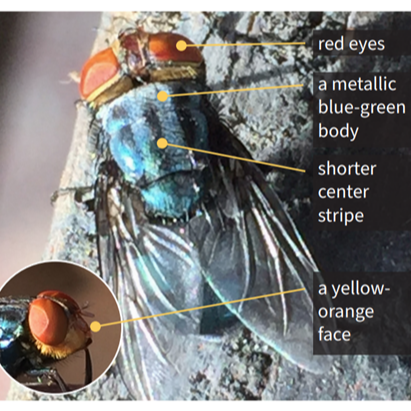
Adult NWS flies are similar in size to common house flies or may be slightly larger. They have these distinguishing characteristics:
- Orange eyes
- Metallic blue or green body
- Three dark stripes along their backs
How Does it Spread? (AVMA)
NWS may spread through:
- Natural dispersal of the flies
- Food-producing animals, horses or companion animals with undetected larval infestations traveling to and from areas where NWS has been found
- Movement of infested wildlife, such as deer.
- People traveling to and from endemic regions (uncommon but has happened)
The USDA has updated the Travel Advisory for Pets to reflect the ongoing situation. Please review the advisory prior to travel with livestock or pets.
For Veterinarians
- Standard Operating Procedure for Possible Detection of New World Screwworm in Animals
- Use of FDA-Authorized Animal Drugs Against New World Screwworm Myiasis
Guidance for Prevention (USDA)
The New World screwworm burrows into open wounds, so wound prevention is paramount.
- Protect pets and livestock from all wound-causing parasites, such as ticks
- Handle livestock carefully and inspect pens and equipment for sharp objects that can cause wounds.
- Monitor common natural wounds, such as castration sites and the newborn umbilicus
- Keep wounds clean and monitor closely and contact your veterinarian if concerns arise
FAQ’s
What medications are available for treatment and prevention?
There are approved medications for treatment and prevention that should be discussed with your veterinarian. The method of treatment, animal production use, and environmental situation should be evaluated and the best course of action taken.
Questions?
For questions or more information, please contact the Veterinary Health Center at Kansas State University at 785-532-5700 for livestock concerns or 785-532-5690 for small animal. The Beef Cattle Institute may also provide strong up-to-date information and can be contacted by email at: bci@ksu.edu.
Additional Resources: